Meta Styling's efficency
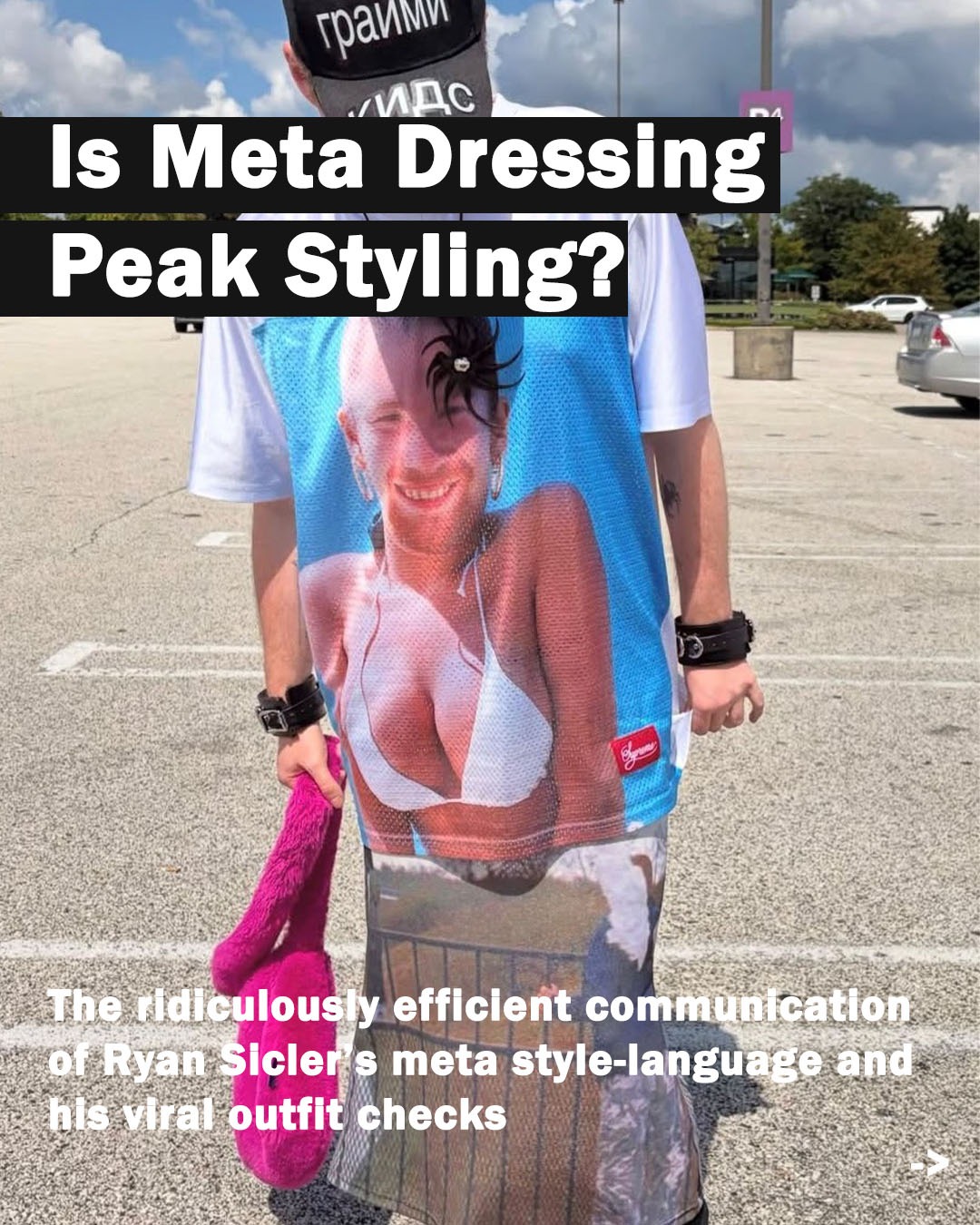
Fashion used to ask a relatively simple question: Is it beautiful?
That question is starting to feel almost irrelevant. In the new age of fashion, something can be beautiful or ugly, elegant or ridiculous, desirable or completely repulsive, and it doesn't necessarily change its value as fashion.
We have become much more interested in what something says, what it references, who understands it, and why someone chose to put it on their body in the first place. This is where meta dressing becomes so interesting.
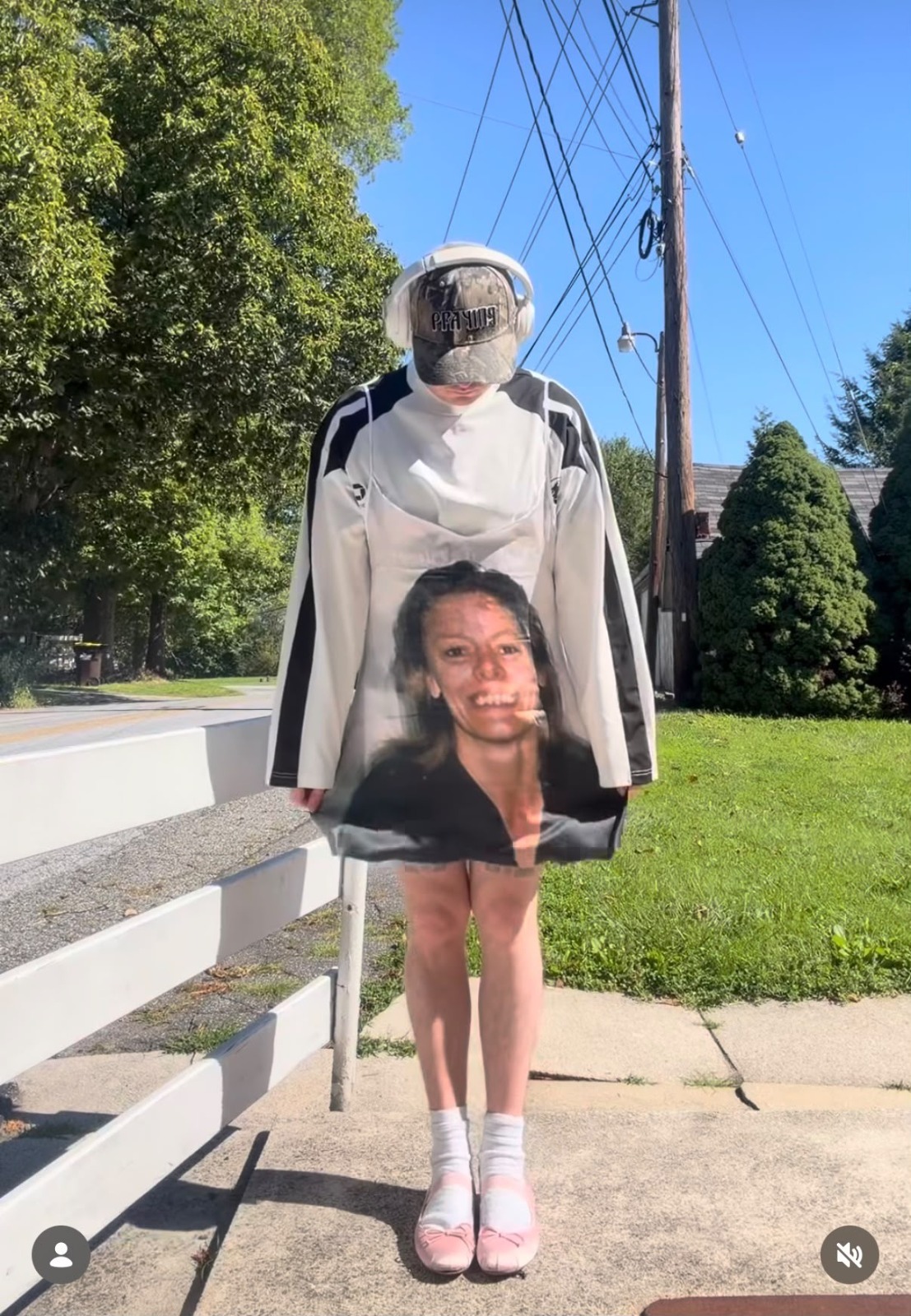
Meta dressing isn't just about looking good. It is about being conscious of fashion as a language and using that language to say something about yourself. A look can reference a designer, a meme, a subculture, a celebrity, a forgotten runway, an internet obsession or even another outfit.
Suddenly, getting dressed becomes less about constructing a visually pleasing image and more about constructing a point of view. And that gives us more room for personality than fashion has ever really had.
Ryan Slicker — @ryanidiotboy — is a particularly good example of this. His looks don't feel like they are chasing conventional beauty. They feel like they are communicating. Pieces collide because the collision itself means something. A garment can be gorgeous, hideous, funny, camp, nostalgic or completely absurd; its visual attractiveness becomes almost secondary to the larger world it creates. That is what makes Ryan a true stylistic visionary.
.jpeg)
He understands that styling doesn't have to end with harmony. In fact, harmony can sometimes be the least interesting outcome.
The most exciting outfits are often the ones where you can see the thought process: I know what this piece means, I know what that piece means, and I know exactly why I want them together. The outfit becomes a conversation. And, importantly, it becomes a conversation with other people who understand the references. That might be the most exciting part of meta dressing. It creates new ways for people to find each other. You see someone wearing an incredibly specific piece, recognize the reference immediately, and suddenly there is a tiny cultural connection between two strangers.
It is almost like finding someone else who speaks the same obscure language.
.jpeg)
Fashion has always been a form of belonging, but the internet has made those communities infinitely more specific. You no longer have to dress according to one broad aesthetic. You can communicate your entire collection of obsessions at once. And that is what makes this new fashion landscape so exciting. We are moving away from the idea that fashion needs to be universally attractive to have value. The more personal the reference, the more interesting the result can become. Meta dressing gives us permission to be specific.
Ryan's styling feels so compelling because he understands this instinctively. He isn't simply putting clothes together; he is building a visual language out of everything he has consumed, loved, remembered and found funny. His outfits feel like an extension of a personality rather than an exercise in aesthetics. And perhaps that is what peak styling actually looks like now.
Not making everyone think your outfit is beautiful. Making someone recognise you in it.