Adéla: The birth of Pop Sleeze
A rough-edged pop silhouette where glamour and grime share the same flashbulb.
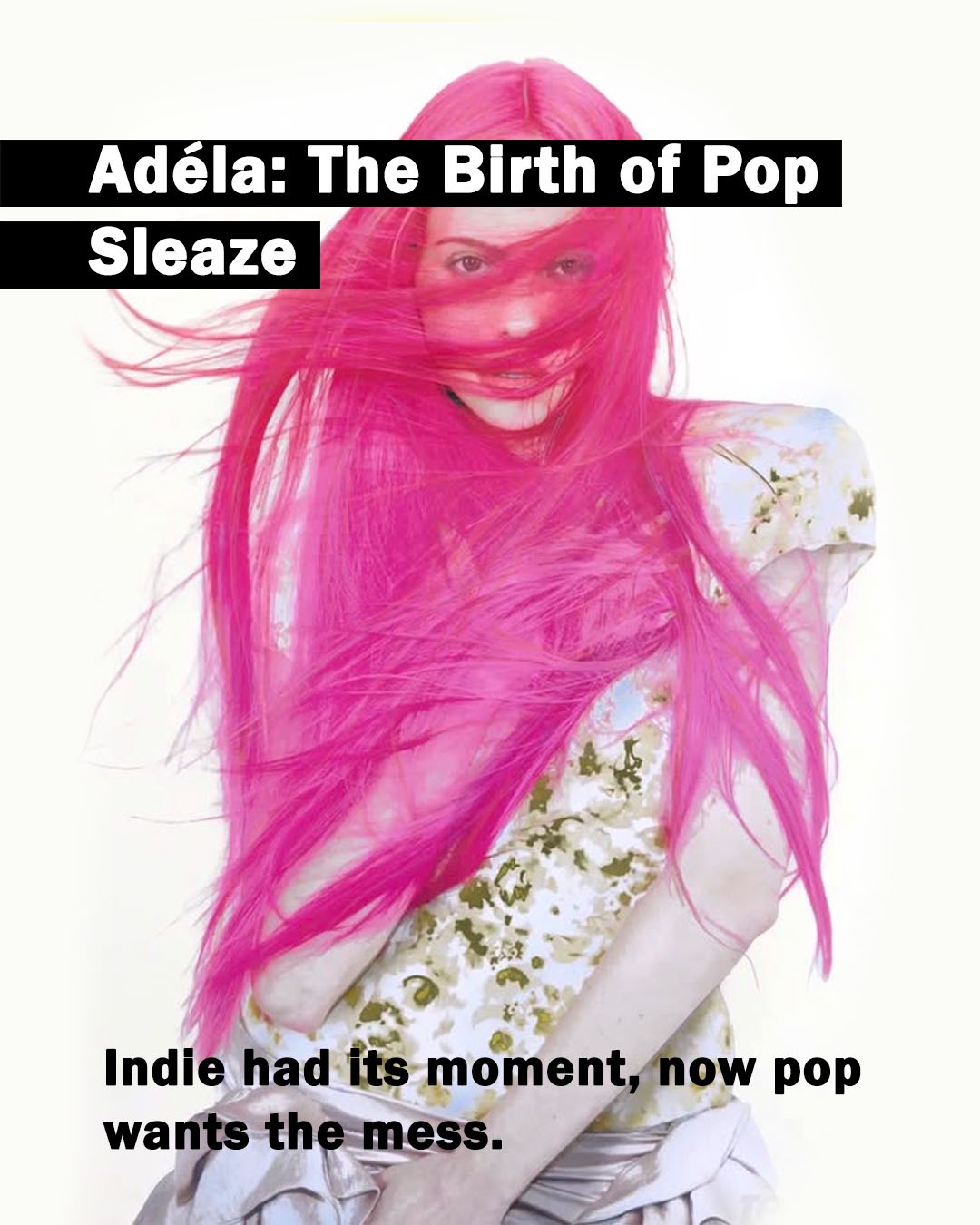
There is no Tumblr anymore. There is no real "indie" left in the way there was in 2011. No obscure blog where a girl with smudged eyeliner, a leather jacket and a disposable camera could become an icon by accident. No underground internet cool that could remain underground for more than five minutes.
The messy girl is back. But this time, she has a stylist, a record deal and a very good reason to be photographed.
Adéla is bringing back something that looks suspiciously like the early-2010s messy girl: undone hair, over-sexualized silhouettes, flash photography, chaotic glamour, ballet references, hyper-feminine styling and the particular kind of beauty that looks better when it feels slightly wrong.
But calling it Indie Sleaze would be too easy. There is no Tumblr to support it anymore. No real indie scene capable of producing a visual language that stays underground. Everything is immediately photographed, reposted, decoded and turned into content.
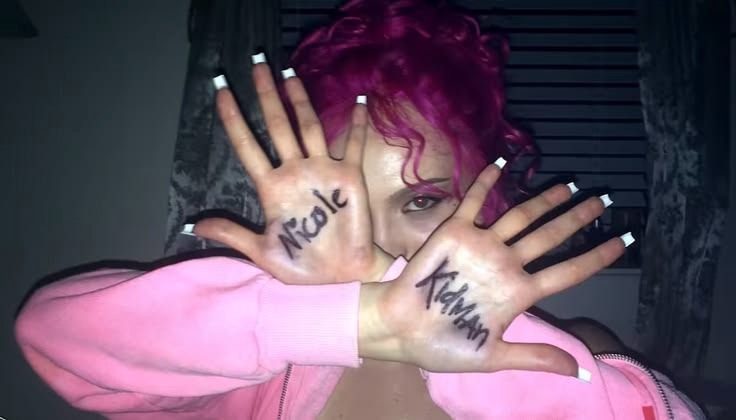
The original conditions that created Indie Sleaze have disappeared. So Adéla is doing something more interesting. She is turning Sleaze into pop. Call it Pop Sleaze.
If Indie Sleaze was about looking like you had accidentally walked into a party and somehow ended up in a fashion editorial, Pop Sleaze is about deliberately constructing that same sense of disorder and then making it enormous.
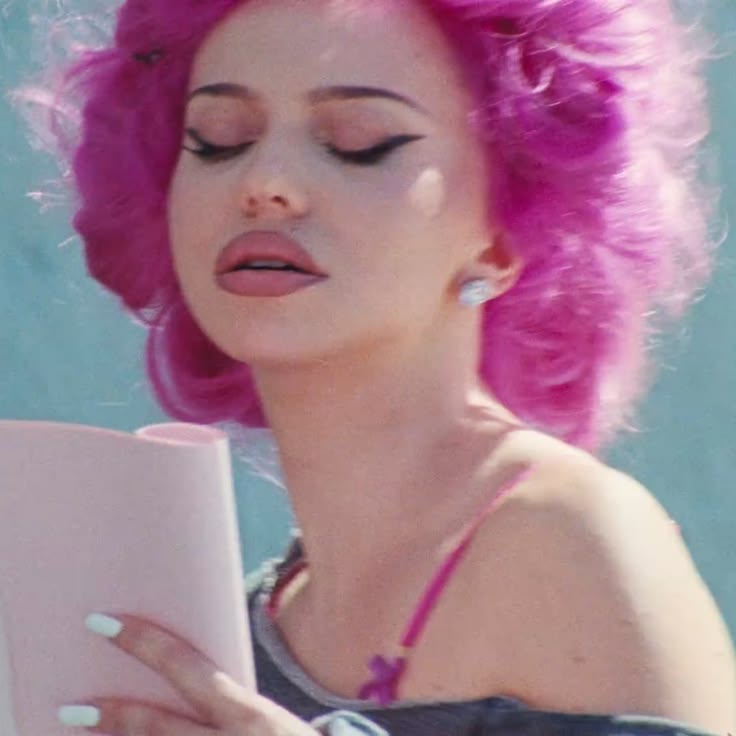
Adéla's image exists somewhere between the pop star, the party girl and the fashion editorial. Her styling does not seem interested in contemporary perfection. Instead, it plays with excess: too much hair, too much leg, too much pink, too much makeup, too much femininity.
The silhouette can be polished, but the attitude is deliberately unruly. It is glamour with something slightly rotten around the edges. And that is precisely what makes it feel different from the hyper-controlled pop imagery of the last decade.
For years, mainstream pop fashion became increasingly immaculate. Bodies were sculpted, skin was perfected, styling became almost architectural. Even "messiness" was carefully manufactured to look expensive.
Adéla's appeal is that she makes the construction visible. The girl looks like she might have slept in her makeup. The hair feels almost too big. The outfit seems one accessory away from becoming ridiculous. There is an element of embarrassment built into the glamour. And fashion has always known that embarrassment can be incredibly sexy.
Her breakout Ain't In LA captures this attitude almost perfectly. The song's rejection of Los Angeles's beauty culture becomes a visual rejection of the city's polished fantasy: the perfect body, the perfect face, the perfect celebrity. Instead, Adéla turns herself into something louder and stranger.
The result is not anti-fashion. It is fashion pushed until it becomes self-aware. That distinction becomes even clearer with Nicole Kidman. The music video, directed by Hannah Lux Davis, turns Kidman's cinematic image into a fashion playground, referencing films including Eyes Wide Shut, Moulin Rouge!, Birth and Babygirl, alongside Kidman's famous AMC advertisement (au.rollingstone.com).
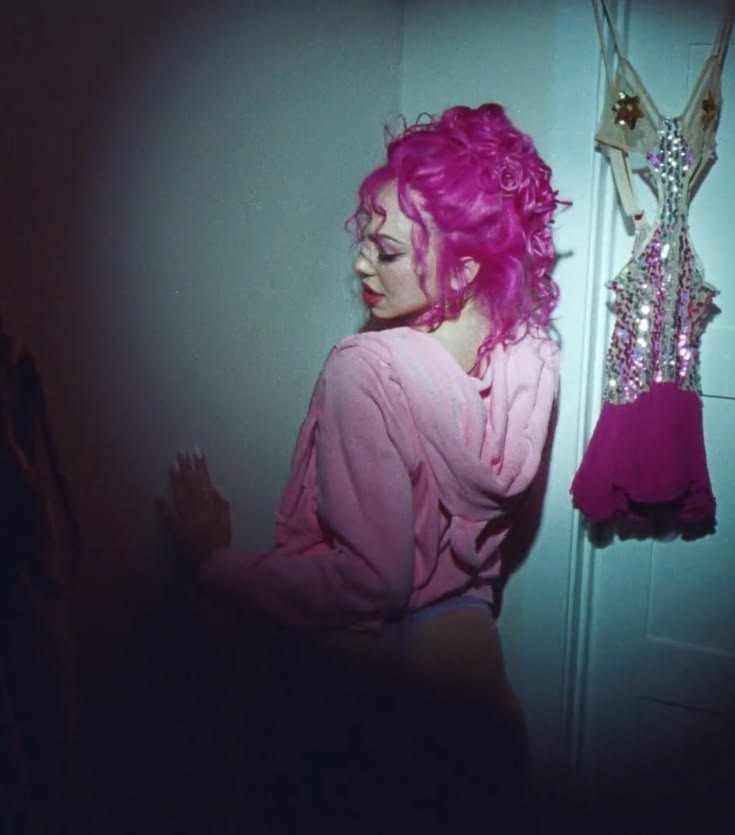
It is less about recreating a specific look than about recreating the fantasy of the celebrity woman: glamorous, sexual, theatrical, slightly absurd. And that is where Pop Sleaze starts to become an aesthetic rather than simply an Adéla signature.
It is interested in the woman who is trying too hard deliberately. The old Indie Sleaze girl wanted to look like she was not trying. The Pop Sleaze girl wants you to know that she is trying, and then pushes it even further.
She wears the wrong shoes on purpose. She lets the hair become ridiculous. She makes femininity excessive instead of refined. She treats the awkwardness of the outfit as part of the outfit. There is something almost anti-minimalist about it.
After years of clean silhouettes, quiet luxury, neutral palettes and "effortless" beauty, Pop Sleaze brings back the pleasure of visual clutter. The outfit does not need to whisper. It can scream.
And crucially, it is not nostalgic in a literal sense. Adéla is not recreating 2011. She is taking its visual vocabulary and translating it into a world where every outfit can become a TikTok, every photograph can become a meme and every styling decision can become part of a personal mythology.
That is why virality matters so much to this aesthetic. Indie Sleaze was documented by accident. Pop Sleaze is designed to look like an accident.
The blurry photograph is no longer evidence of a night out; it is a filter. The messy hair is no longer the consequence of dancing; it is styling. The overexposure is no longer a technical mistake; it is an aesthetic choice. The artificiality is part of the charm.
Adéla understands that contemporary pop does not need to look effortless anymore. It needs to look memorable.
And perhaps that is the real reason the messy girl is returning. Not because we want to go back to Tumblr. But because we are getting bored of looking perfect. The new pop girl does not want to be the cleanest person in the room. She wants to be the one you cannot stop looking at.
Indie Sleaze had the underground. Pop Sleaze has the spotlight.