We Love Praying
.jpeg)
There is something deeply funny about Praying becoming a fashion brand.
Not because the clothes are particularly funny, although some of them absolutely are, but because the entire thing feels like an inside joke that somehow escaped the group chat and ended up in fashion week.
Praying, founded by Alex Haddad and Skylar Newman in 2020, built its universe around exactly the kind of cultural references that most traditional fashion brands would probably put through three rounds of marketing approval before deciding were “too niche.” Religious imagery, celebrity worship, Y2K nostalgia, internet humour, bad taste, sincerity, irony: everything gets thrown into the same blender. The result is a brand that can sell you a “God’s Favorite” T-shirt, a Holy Trinity bikini and a bag featuring Twilight, while somehow making all three feel like part of the same universe.
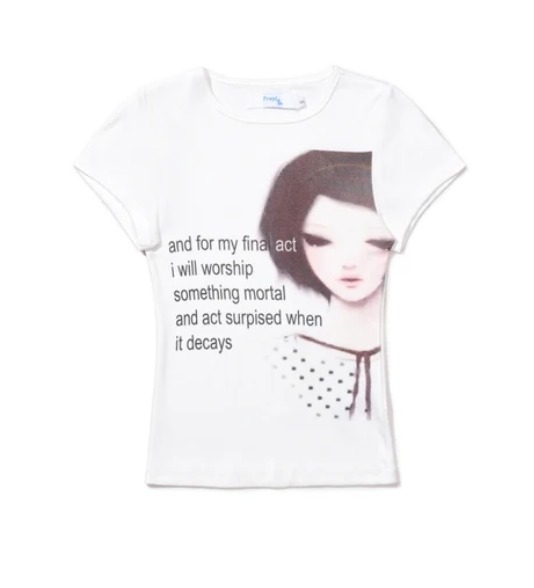
The brand has always existed in that uncomfortable little space between believing something and making fun of it. Its founders have described their designs as deliberately open to multiple interpretations: a message can be ironic, sincere, or both at the same time.
Even the act of making the clothes has been described by the founders as a kind of prayer; taking the absurdity, darkness and contradictions around them and turning them into something funny.
It is a very internet way of looking at fashion. And increasingly, it is a very good way of understanding where fashion is going.
For years, brands desperately tried to manufacture “community”. There were campaigns, ambassadors, hashtags, carefully constructed brand personalities and endless attempts to make a customer feel like they belonged to something. Praying did something much simpler: it actually started from the culture its customers were already living in.
.jpeg)
The references aren't broad enough to appeal to everyone. They are specific enough to make someone think, wait, you know about that too?
A Brangelina bag. A Twilight image. A phrase that looks like it came from an obscure corner of Tumblr. A Catholic reference used completely incorrectly. A Kim Kardashian image from 2012. The joke only really works if you understand the joke. And that creates something much more valuable than traditional advertising: recognition.
Praying's Instagram strategy has historically blurred the line between reality and fabrication, even making fake celebrity images that were deliberately convincing enough to make people wonder whether they were real. That became part of the brand's appeal because the audience understood that the joke wasn't simply printed on the shirt — the entire brand was the joke.

The strongest young labels increasingly feel less like corporations trying to identify a demographic and more like people who happen to understand the same internet as their customers. They know the references, the micro-aesthetics, the celebrities, the forgotten memes and the strangely specific cultural memories. They aren't asking, what does Gen Z want? They are asking, what are we all talking about right now?
Praying's recent 2008 Global Financial Crisis pieces might be the funniest example yet. Yes, there is a hoodie. Yes, it costs $180. Yes, it literally says “2008 Global Financial Crisis.” The sleeves reference the period from December 2007 to June 2009, and the distressed treatment makes the whole thing look like someone discovered the economic collapse in a thrift store. The hoodie went viral after NBA player Rob Dillingham was photographed wearing it, with the piece subsequently selling out. But the truly insane version is the Birkin-like bag. Praying took the visual language of the ultimate luxury status object and essentially turned it into a souvenir from the global financial collapse: a Birkin imitation carrying the words 2008 Global Financial Crisis. It is difficult to imagine a more perfect collision of luxury, economic anxiety, internet humour and fashion history. A Birkin is supposed to communicate wealth.
This one communicates: remember when the entire financial system almost died?
The joke also depends on generational distance. For someone old enough to remember the crisis, 2008 means unemployment, collapsing housing markets, Lehman Brothers and the general feeling that the adults had absolutely no idea what they were doing. For someone born around the time of the crisis, it is increasingly just another piece of cultural history, something that exists in documentaries, Wikipedia articles, memes and now, apparently, as a fashion accessory.
The same transformation happens constantly online. Things that were once traumatic, embarrassing, politically charged or simply uncool eventually become references. Fashion has always recycled history, but the internet has accelerated the process to an absurd degree. Praying understands this instinctively. The brand doesn't need every piece to have a grand intellectual justification. In fact, explaining the joke too much would probably ruin it. Its strength is that the reference can be simultaneously stupid and strangely clever.
You can wear the financial-crisis bag because you think it is hilarious. You can wear it because you love Birkins but cannot afford one. You can wear it because you were three years old in 2008 and the whole thing feels completely detached from your reality. Or you can just think the bag goes hard.
That is the difference between a brand that is marketing to a culture and one that actually seems to be inside the culture. Praying doesn't always tell its audience what something means. It gives them enough information to recognise it, and then lets the internet do the rest.
Maybe that is why a brand called Praying has managed to build such a devoted following without asking anyone to believe in anything. We love praying. Just don't ask us to go to church.