WHY IS THERE A TOMATO STEM IN MY BROOCH?
And why does it make perfect sense?
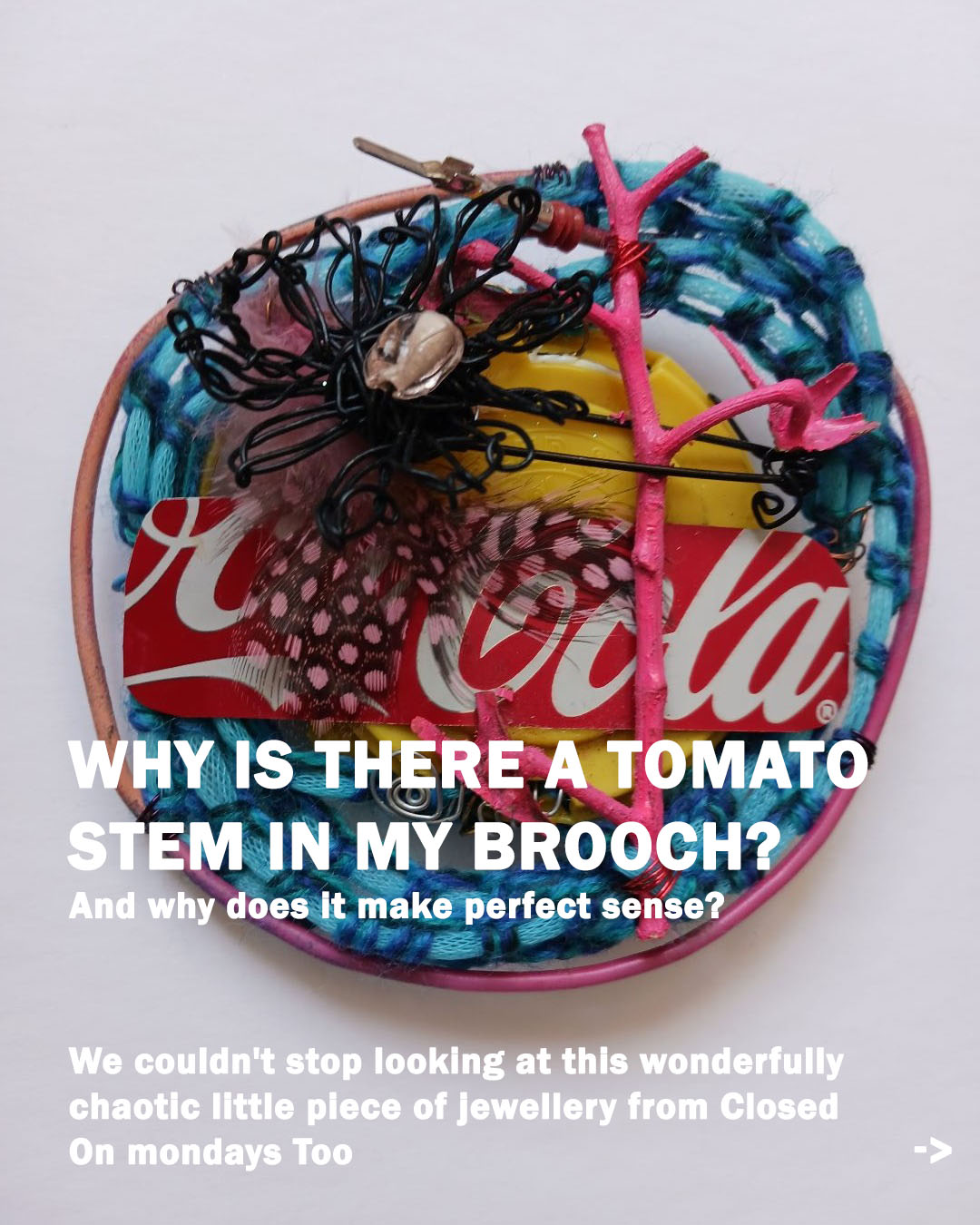
We couldn't stop looking at this wonderfully chaotic little piece of jewellery. In the hands of an inventive maker, wire, plastic, feathers, soda cans, and even a dried tomato stem, become something worth wearing. There is something wonderfully unruly about the Round & Round brooch. It refuses the clean divisions we have become accustomed to in jewellery: precious versus worthless, natural versus synthetic, decoration versus debris. Instead, it throws everything together and somehow makes the chaos feel intentional.
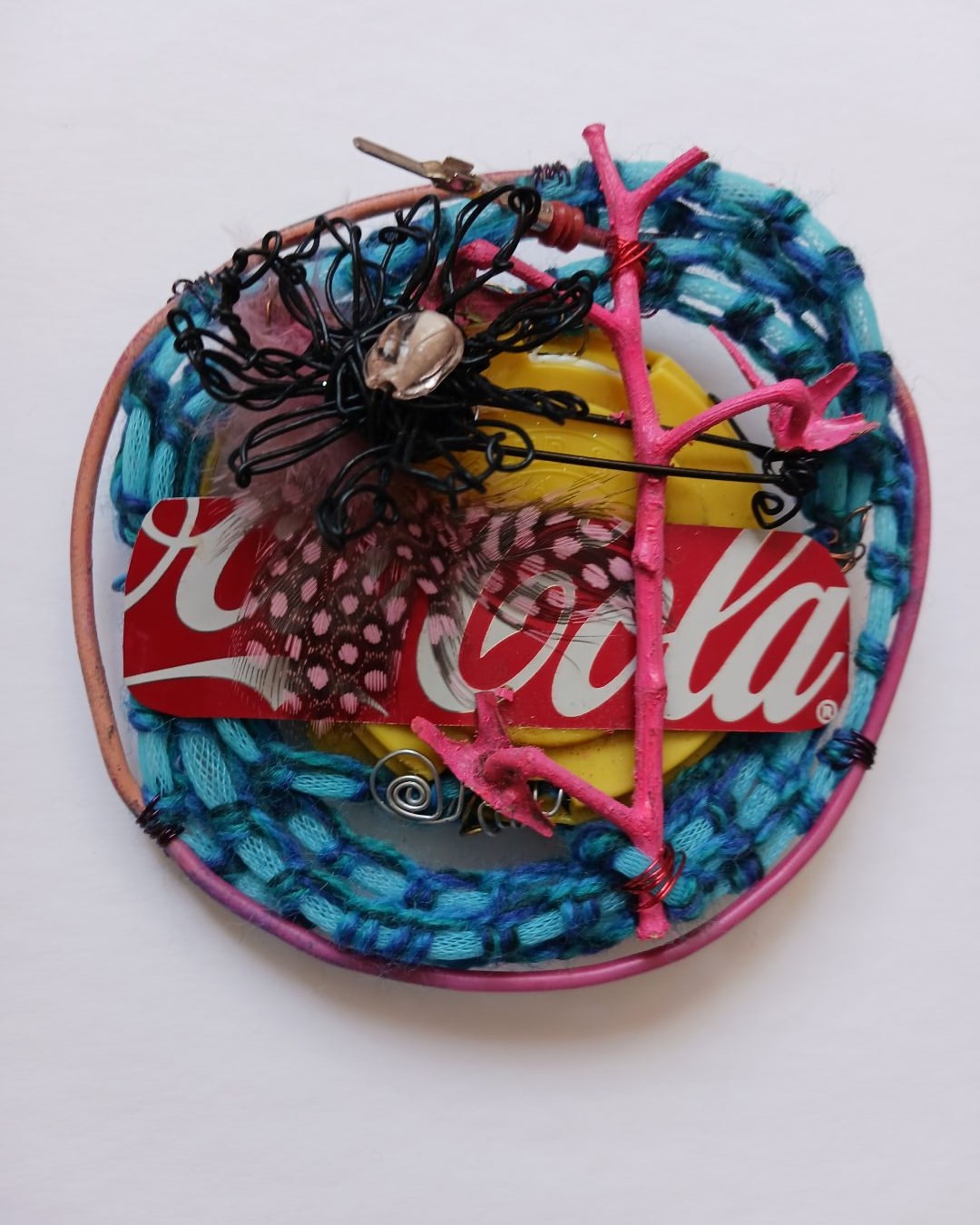
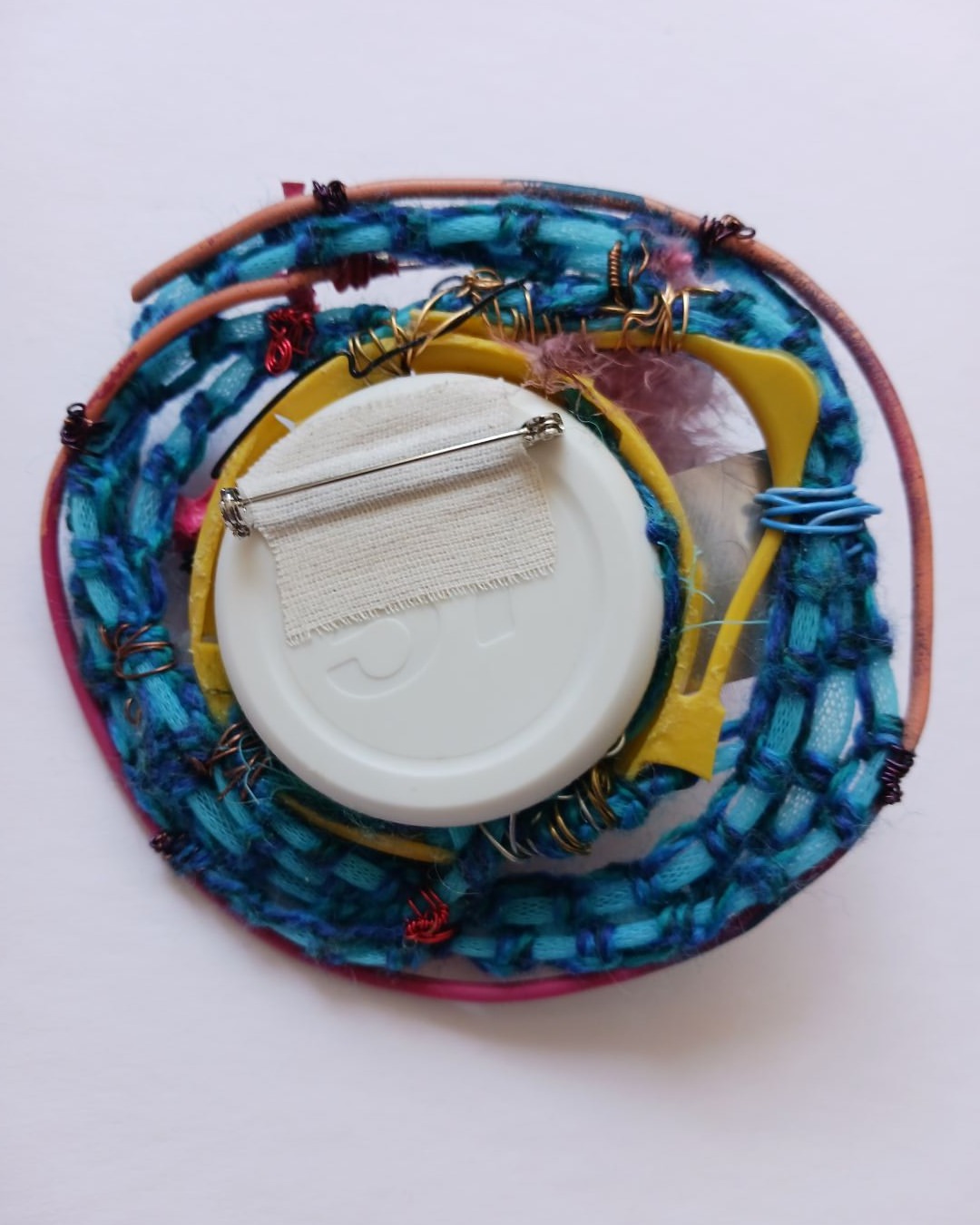
Created in Canada in 2025 as a one-of-a-kind piece, the brooch is assembled from an unlikely inventory of everyday materials. Household and telephone wire sit alongside yarn, feathers, painted cable, a strip of soda can, a spray-paint-can handle, a ketchup lid, and perhaps most unexpectedly, a painted dried tomato stem. New materials make up the remaining 35 percent: a safety pin, jewellery wire, glass bead, mesh tubing, fabric tape and the hardware that turns the assemblage into a brooch. It is precisely this collision of materials that gives the work its character. A fragment of a Coca-Cola can becomes graphic ornament. Industrial wire curls into something resembling a botanical drawing. Synthetic fibers become a miniature landscape. The dried tomato stem, meanwhile, sits somewhere between found object and organic relic. The result is not polished in the traditional sense. It is assembled rather than perfected. Its beauty comes from accumulation: one thing layered over another until the original identities of the materials begin to dissolve. What was once packaging becomes embellishment; what was once household waste becomes structure; what might normally have been thrown away becomes the focal point of an object designed to be kept.
The inclusion of preserved food in jewellery is particularly interesting because it introduces a material with a different relationship to time. Plastic can remain almost unchanged for decades. Wire can rust or tarnish. Fabric can fray. A dried plant, however, carries the memory of something that was once alive. Even after being removed from the fruit, the stem retains its organic irregularity, the shape is not manufactured, but grown. That makes the decision to place it alongside industrial materials more than a quirky detail. It creates a small tension between the artificial and the living. The tomato stem belongs to the world of growth and decay; the plastic and wire belong to the world of manufacturing and permanence. Bringing them together turns the brooch into a miniature meeting point between two very different kinds of material history.